


You have the tickets. Now answer the harder question: how do you get 30, 50, or 80 people to kick off together when parking is locked down, rideshares are surging, and one late arrival can unravel the whole plan?
Prime Charter Bus has your group transportation needs covered for high-demand events across San Francisco, Los Angeles, and Las Vegas. In this guide, we delve into vehicle selection, booking timelines, cost math, and stadium-day logistics so you can feel confident that you’ll arrive on time to enjoy this special occasion.
According to the American Bus Association via FIFA's World Cup 2026 host city overview, nearly 600 million passenger trips are completed annually on charters, tours, and scheduled service. Motorcoaches average 195.3 passenger miles per diesel gallon equivalent, making them one of the most efficient modes for moving groups. And as charter bus rental pricing guides note, pricing for one-day events is typically calculated per hour, while multi-day trips shift to per-day or per-mile structures.
Why Charter Buses Win on World Cup Match Days

On a normal day, scattered arrivals are inconvenient. On a World Cup match day, scattered arrivals are a logistical emergency. Here’s what you’re actually managing:
- Parking restrictions tighten around stadium perimeters hours before kickoff.
- Rideshare surge pricing spikes unpredictably and compounds across a large group.
- Multiple pickup locations mean every extra vehicle is another failure point.
- One late arrival can delay the entire group if there is no clear departure policy.
A single luxury charter bus consolidates those failure points into one. One driver. One route. One pickup sequence. One invoice. When something shifts, such as a venue-mandated traffic detour or a late road closure, dispatch communicates the change to the driver and the organizer simultaneously, rather than leaving 40 people to figure it out on their own.
For corporate event planners, especially, this matters beyond logistics. When complaints arise after a group outing, they tend to trace back to the moment the group fragmented. A charter mitigates this issue, keeping everyone on the same schedule, in the same space, building the same shared experience before the whistle blows.
Consider this scenario: a corporate fan group of 48 people traveling to a match with pickups at two downtown hotels and one office park. With staggered pickup windows built into the route, hard meet times communicated a week in advance, and a 45-minute stadium buffer, the group arrived at the gate together, gear stowed, energy intact. Lumen Field notes that parking opens at 6 am on event days, but bus drop-off zones and pedestrian flow are entirely different considerations that require separate planning.
What if part of the group misses a pickup? Designate a secondary meeting point at the stadium entrance before departure, and communicate it in writing. Anyone who misses the bus knows exactly where to go, and the group on board doesn’t lose 20 minutes waiting at the curb.
Choose the Right Vehicle
Matching the vehicle to the group is where planning either succeeds or quietly starts to unravel. It’s ideal to review charter bus seating capacities before requesting a quote, as it saves time and prevents mid-booking surprises.
Full-Size Coach Bus: The right choice for large fan groups and longer transfers. Luggage bays handle flags, banners, coolers, and gear bags without crowding the cabin. An onboard restroom removes one of the most common friction points on long travel days. "Deadhead mileage" refers to the distance the driver travels to reach your pickup point; it’s often factored into pricing and worth confirming upfront.
Mini Bus: Mid-size groups benefit from mini buses when the route involves tighter urban streets, hotel drop-off zones with limited clearance, or venues where a full coach cannot stage effectively.
Sprinter Van or SUV: For VIP groups, small executive teams, or airport-to-hotel transfers with minimal gear. These work well as supplemental vehicles when one segment of the party has different timing or access needs.
On accessibility: ADA requirements, step height, aisle width, and mobility device storage vary by vehicle. Over 1,984 motorcoach companies operate across the United States and Canada, and configurations differ. Request the specific accessibility setup in writing before confirming the booking. Amenities, including Wi-Fi, power outlets, and climate control, vary by operator and vehicle age. The signed agreement should outline every available feature.
#cta_start
Get a Quote Before World Cup Inventory Disappears
Share your match dates, headcount, and pickup locations. Someone from our team reviews every request and follows up directly — no automated estimates, no guesswork on vehicle fit.
Request Charter Bus Availability
#cta_end
Booking Timeline and Planning Steps
World Cup match weekends aren’t ordinary event days. Inventory tightens months in advance, and the groups that secure the right vehicle at the right price are the ones that started early.
For detailed group trip planning guidance, gather these details before requesting a quote:
- Confirmed match dates and kickoff times
- All pickup locations with full addresses
- Total headcount and expected luggage volume
- Any accessibility requirements
- Preferred departure buffer before kickoff (45 minutes minimum recommended)
When you don’t have the full scope of information, it slows the quoting process and can result in losing your ideal charter bus.
How Multi-Pickup Routes Work
Multi-stop routes require hard meet times, not approximate ones. Build a five-minute buffer at each stop and communicate clearly that the bus departs on schedule. One late arrival should not delay the entire group. We recommend setting this expectation in writing before match day to prevent the awkward conversation at the curb.
Stadium-Day Schedule Template
Work backward from kickoff. A reliable sequence:
- Confirm drop-off zone location with the venue (not just the address)
- Add 30 minutes for post-drop-off walking distance to the gate
- Add 30–45 minutes for security screening at large venues
- Set your latest departure time from the final pickup stop
- Designate a post-match meeting point before anyone enters the stadium
Last-Minute Changes
As long as there’s reasonable notice, pickup times can often be adjusted. However, changing vehicle size during peak demand is significantly harder. If your headcount is uncertain, book for the higher number and confirm the final count as early as the operator allows.
According to FIFA's official tournament FAQ, match scheduling and venue assignments are confirmed closer to the tournament. Build flexibility into itineraries where possible, and document the plan in a shareable format for corporate admins or coordinators managing stakeholder expectations.
What Charter Bus Pricing Includes
Quotes are built from several components: hourly or mileage-based rates, deadhead mileage to the pickup location, driver time minimums, and market demand surcharges during large events. During a World Cup weekend, local demand impacts pricing the same way it affects hotel rates.
Hidden-fee checklist to review before signing:
- Parking and staging fees at the venue
- Tolls and permit costs
- Driver lodging if the event requires an overnight stay
- Overtime rates if the match or post-match traffic extends beyond the booked window
Ask for an itemized quote. Confirm what’s included and what triggers additional charges. For groups splitting costs, collect deposits early, use per-seat pricing for transparency, and set a clear policy for late joiners before the booking is finalized.
World Cup Host-City Logistics: SF Bay Area, Los Angeles, and Las Vegas
Each host city has unique transportation realities. San Francisco charter bus rentals require familiarity with restricted downtown corridors, bridge traffic patterns, and stadium perimeter rules that differ from Southern California venues.
Stadium zones for large events typically include designated bus drop-off areas, restricted vehicle perimeters within a half-mile of gates, and pedestrian-only zones that activate hours before kickoff. You can plan on walking the last half-mile.
Post-match gridlock is predictable. Departing 20 to 30 minutes after the final whistle, rather than immediately, often cuts travel time significantly. Drivers with local event experience know which exit corridors open first and which stay blocked for an hour.
For groups attending multiple matches across cities, a charter makes sense when the travel distance and group size justify the cost. For back-to-back matches in different metro areas, a flight plus local shuttle combination is often more practical. Evaluate both options honestly to decide which is best for your situation.
Keep in mind that official FIFA and venue transportation plans are subject to change. Confirm current guidance from official sources close to match day before finalizing any itinerary.
Safety and Reliability: What to Verify Before Booking
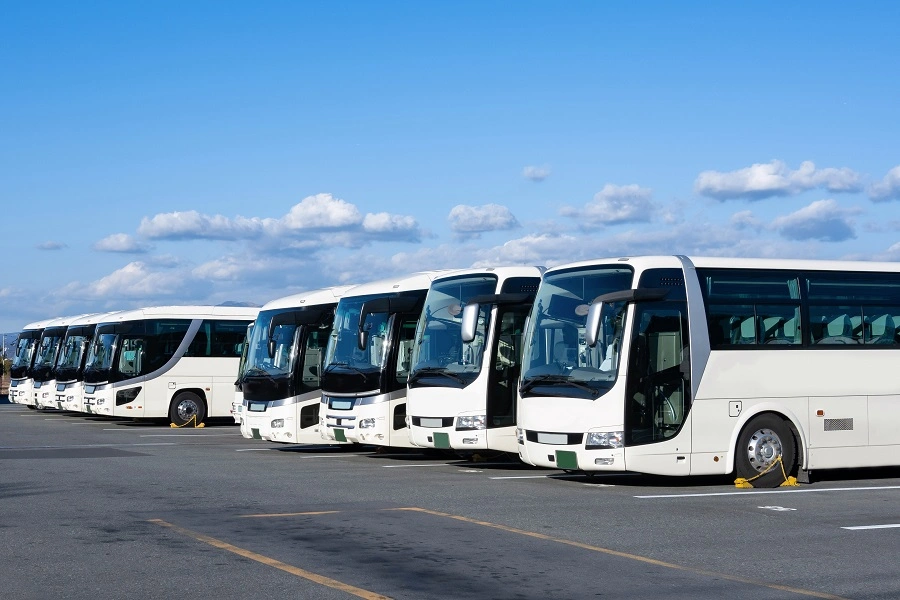
Driver licensing, hours-of-service compliance, and vehicle maintenance are the foundation of safe group travel. These are regulatory requirements, not marketing points. When evaluating operators, ask:
- What is the FMCSA safety rating? (Verify directly at safer.fmcsa.dot.gov)
- What is the average age of the fleet, and when was the assigned vehicle last inspected?
- Who is the dispatch contact on match day, and what’s the response protocol if the driver is unreachable?
- What happens if the venue changes the drop-off zone 48 hours before the event?
On-trip communication is equally important as pre-trip planning. A single dispatch contact who can relay real-time updates to the driver and the organizer removes the anxiety of the unknown. Confirm aspects like climate control, seating comfort, and accessibility accommodations in writing. Factors outside any operator's control include traffic incidents, security delays, and weather, but buffers absorb these. Plans that assume everything goes perfectly aren’t realistic, so always have a backup!
Policies and Paperwork: What to Confirm Before Signing
The standard booking flow for a charter bus runs from inquiry to quote to signed agreement to non-refundable deposit to final payment. As a best practice, document each step along the way.
Before paying a deposit, confirm: the exact pickup windows, overtime rates if the event runs long, and the cancellation policy in plain language. Roster changes should be communicated as early as possible; most operators can accommodate reasonable adjustments before the final payment deadline. For corporate bookings, document stakeholder approvals before submitting a deposit.
World Cup Charter Checklist and Next Step
Before match day, confirm these details:
- Vehicle size matches final headcount.
- Pickup meet times are set with a clear late-departure policy in writing.
- Schedule includes a 45-minute stadium buffer.
- Drop-off zone rules are verified with the venue.
- The post-match meeting point is designated before anyone enters the stadium.
Booking early is the best way to secure the right vehicle at a predictable price, and Prime Charter Bus is surely one of the best options. When inventory allows, we can accommodate urgent bookings, but peak World Cup weekends move fast.

Plan Your World Cup Group Travel Before Seats Fill Up
Match day logistics are manageable when the transportation is locked in early. Share your dates, headcount, and pickup location to get a confirmed quote.


